Choose the media according to the most damaging combination of conditions, not simply the average inlet temperature. Continuous temperature, short-term peaks, moisture, oxygen, acid gases, alkalis, abrasive particles and cleaning intensity must be evaluated together.
PPS is often suitable for moist, acidic gas at moderate-to-high temperatures, provided oxidation remains controlled. P84 performs well under higher, relatively dry heat, while PTFE provides the broadest chemical resistance. Fiberglass can tolerate very high temperatures but requires suitable surface treatment and careful mechanical handling.
What Factors Determine Filter Bag Material Selection?
Effective filter bag material selection begins with a complete flue gas analysis. Specifying bags from temperature alone can lead to hydrolysis, oxidation, chemical attack or premature mechanical failure.
The main operating data should include:
Normal and maximum gas temperatures
Frequency and duration of temperature peaks
Water-vapor concentration and dew point
Concentrations of SOx, HCl, HF, NOx and other reactive gases
Oxygen content
Dust loading, particle size and abrasiveness
Cleaning method and pulse pressure
Required particulate-emission level
The US EPA notes that temperature, corrosivity and particle stickiness can limit fabric-filter operation. It also warns that low-temperature operation may allow acid gases to condense, causing corrosion and filter blinding.
Which Filter Bag Material Is Best for High Temperatures?
There is no single best material for every high-temperature application. The correct choice depends on whether heat is combined with moisture, oxygen or corrosive compounds.
| Material | Indicative continuous temperature | Main advantages | Important limitations |
|---|
| Polyester | Around 140°C | Economical and mechanically stable for moderate conditions | Limited hydrolysis and chemical resistance |
| PPS | Around 190°C | Strong resistance to hydrolysis, acids and alkalis | Limited oxidation resistance |
| Aramid | Around 200°C | Good strength in dry, high-temperature service | Vulnerable to moisture, acids and alkalis |
| P84 polyimide | Around 240°C | High heat capability and efficient surface filtration | Limited resistance to strong acids and alkalis |
| PTFE | Around 250°C | Excellent resistance to heat, hydrolysis, oxidation, acids and alkalis | Higher initial cost |
| Fiberglass fabric | Around 260°C | Suitable for very high and stable temperatures | Less tolerant of flexing and some corrosive conditions |
These values are general material limits rather than guaranteed design temperatures. BWF Envirotec lists continuous ratings of approximately 190°C for PPS, 200°C for aramid, 240°C for polyimide, 250°C for PTFE and 260°C for fiberglass. Actual limits may need to be reduced when several damaging conditions occur simultaneously.
When Should PPS Be Selected?
PPS is commonly considered where flue gas contains moisture, acids or alkalis and remains within the material’s temperature range. Its strong hydrolysis and chemical resistance make it useful for boilers, waste treatment and other combustion-related processes.
However, PPS has limited oxidation resistance. High oxygen content, elevated temperature and prolonged exposure can cause the fibers to lose strength. PPS should therefore not be selected only because the gas is acidic; oxygen concentration and temperature peaks must also be reviewed.
When Is P84 More Suitable?
P84 is suited to dry, high-temperature applications where efficient filtration of fine particles is important. It can operate at higher temperatures than PPS and aramid, but it provides less resistance to strong acids, alkalis and hydrolysis than PTFE.
P84 may also be blended with other fibers to improve filtration performance without constructing the entire bag from the higher-cost material. Donaldson identifies P84 as a high-temperature medium for dry pulse-jet applications, with a listed maximum of approximately 238°C.
When Is PTFE Worth the Higher Cost?
PTFE is generally the strongest option when high temperature occurs together with moisture, oxidation and aggressive chemical exposure. It has excellent resistance to hydrolysis, acids, alkalis and oxidation, making it suitable for severe or unstable flue gas conditions.
The higher purchase price should be compared with the total operating cost. Longer service life, fewer emergency replacements and more stable pressure drop may make PTFE more economical in applications where lower-cost media fail repeatedly.
Is Fiberglass Suitable for Corrosive Flue Gas?
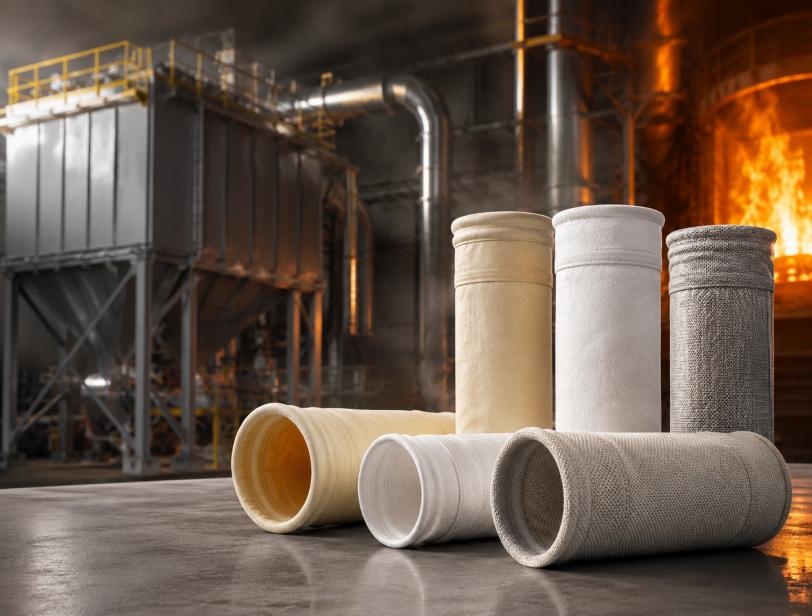
Fiberglass provides one of the highest temperature capabilities among commonly used high temperature filter bags, but untreated fiberglass is not automatically suitable for every corrosive gas stream.
Its performance depends heavily on the weave, surface finish, membrane and chemical composition of the gas. PTFE coatings or membranes can improve dust release and chemical protection. Gore, for example, specifies PTFE-based fiberglass constructions for continuous operation at up to 260°C in selected applications.
Fiberglass is also less flexible than many synthetic felts. Poor cage alignment, aggressive pulse cleaning or frequent movement can damage the fibers. Baghouse construction and cleaning conditions must therefore be considered during selection.
Why Is the Flue Gas Dew Point Important?
Even chemically resistant industrial filter bags may fail when the system repeatedly operates below the water or acid dew point.
Condensation can turn dry dust into a sticky layer that is difficult to pulse clean. Acid condensation can also attack the bags, cages, tube sheet and collector housing. EPA guidance states that acid-gas condensation can cause corrosion and bag blinding, while Gore recommends maintaining fabric-filter operation above the dew point.
This risk is often highest during:
Cold startup
Extended low-load production
Unplanned shutdown
Excessive evaporative cooling
Air leakage into the collector
Poorly insulated ducts or baghouse walls
The safest material cannot compensate for uncontrolled condensation. Temperature management, insulation, startup procedures and leak control must support the media choice.
Should Dust Properties Affect the Material Choice?
Yes. Chemical compatibility alone does not ensure reliable operation of dust collector filter bags.
Sharp or abrasive particles may require heavier fabric, reinforced scrim or abrasion-resistant treatment. Fine, cohesive dust may benefit from a surface membrane that limits deep penetration into the felt. Sticky dust may require oleophobic or hydrophobic treatment, together with strict moisture control.
The cleaning system must also match the selected media. Excessive pulse pressure can shorten bag life, while insufficient cleaning allows differential pressure to rise. Fiberglass, felt and membrane-laminated bags may require different cleaning settings even when used in the same process.
A Practical Selection Sequence
Use the following order when comparing candidate materials:
Eliminate media that cannot tolerate the continuous temperature.
Check whether short-term peaks exceed the surge limit.
Remove materials that are incompatible with the gas chemistry.
Evaluate oxidation, hydrolysis and condensation risks.
Check abrasion, dust adhesion and filtration requirements.
Confirm compatibility with the cleaning system and baghouse design.
Compare expected service life and total operating cost.
When operating conditions fluctuate significantly, base the final decision on the worst credible condition rather than the most common one.
Conclusion
Material selection for hot and corrosive flue gas requires more than matching a fabric to a temperature chart. Temperature peaks, acid concentration, moisture, oxygen, dew point, dust characteristics and cleaning conditions must be reviewed as one operating environment.
PPS is often appropriate for moist and chemically aggressive gas when oxidation is controlled. P84 is stronger for dry, higher-temperature service. PTFE provides the broadest protection under severe combined conditions, while treated fiberglass may be suitable for very high and relatively stable temperatures.
EnvirontechTS can evaluate actual flue gas data, baghouse configuration and emission requirements to recommend a technically and economically suitable filter-bag specification.
FAQ
What is the most chemically resistant filter bag material?
PTFE generally provides the broadest resistance to acids, alkalis, moisture and oxidation.
Can PPS bags handle acidic flue gas?
Yes, but temperature and oxygen levels must remain within suitable limits.
What causes filter bags to become brittle?
Common causes include overheating, oxidation, chemical attack and repeated acid condensation.
Can operating below the dew point damage filter bags?
Yes. Condensation can cause chemical corrosion, sticky dust buildup and bag blinding.
 English