Wastewater and by-product handling should be designed at the same time as the absorber, reagent preparation and gas-treatment sections. The key decisions are the required purge rate, chloride limit, wastewater discharge or reuse target, gypsum quality and the final route for sludge or off-spec solids.
Treating these streams as downstream accessories often results in scaling, corrosion, unstable gypsum quality and an undersized wastewater treatment plant.
Why Does FGD Wastewater Require Specialized Treatment?
Wastewater from a wet flue gas desulfurization process is not simply dirty process water. It can contain high concentrations of chloride, sulfate, calcium and magnesium, together with suspended gypsum particles and trace constituents such as selenium, arsenic and mercury.
Its composition also changes with fuel quality, limestone purity, upstream particulate control, absorber chemistry and water-reuse practices. High total dissolved solids can interfere with both treatment performance and trace-element analysis, particularly when contaminants must be measured at very low concentrations.
The wastewater system should therefore be sized for expected fluctuations rather than a single average analysis. Useful design data include:
Minimum, normal and maximum purge flow
Chloride and total dissolved solids
Suspended solids and gypsum saturation
Selenium, arsenic, mercury and other regulated metals
Nitrate and nitrite where biological treatment may be required
Temperature, pH and oxidation-reduction potential
Variations caused by fuel or operating-load changes
Representative sampling should cover startup, low-load operation, fuel changes and normal full-load conditions.
How Is the Required FGD Purge Rate Determined?
The purge removes soluble salts and trace contaminants that would otherwise accumulate in the absorber slurry. A purge rate that is too low can increase chloride concentration, corrosion risk, scaling and gypsum contamination. An unnecessarily high rate increases wastewater treatment capacity, chemical use and sludge production.
The design should be based on a water-and-solids mass balance covering:
Moisture entering with flue gas and reagent
Process and seal-water additions
Evaporation in the absorber
Water leaving with gypsum
Internal recycle streams
The maximum acceptable chloride concentration
The chloride limit should be established from absorber materials, pump and piping metallurgy, reagent performance and the required by-product specification. It should not be copied directly from another plant.
Flow equalization is also important. A buffer tank can protect downstream treatment from rapid changes in flow, pH and contaminant loading, while providing more stable chemical dosing.
What Treatment Stages Are Usually Required?
The appropriate treatment train depends on the discharge standard, wastewater chemistry and whether the plant plans to reuse water or achieve zero liquid discharge.
| Treatment stage | Primary purpose | Main design concern |
|---|
| Equalization | Stabilizes flow and chemistry | Mixing, residence time and solids suspension |
| pH adjustment | Supports metal precipitation | Alkali demand and automatic control |
| Chemical precipitation | Removes suspended solids and selected metals | Reagent dose and sludge characteristics |
| Coagulation and clarification | Separates precipitated solids | Settling rate and hydraulic peaks |
| Biological treatment | Targets selenium and nitrogen compounds | Salinity, temperature and feed variability |
| Filtration or membranes | Provides additional polishing or recovery | Scaling, fouling and pretreatment |
| Thermal concentration | Reduces or eliminates liquid discharge | Energy use, brine chemistry and salt handling |
Chemical precipitation is commonly used to remove suspended solids and metals. Biological or other advanced treatment may then be required for constituents such as selenium and nitrate that are not consistently controlled by conventional clarification alone. EPA technical guidance identifies chemical precipitation, biological treatment, evaporation and zero-discharge arrangements among the treatment approaches used for FGD wastewater.
Membrane and thermal systems require particularly careful pretreatment. Untreated wastewater can be supersaturated with gypsum, creating a high scaling risk in filters, membranes, heat exchangers and evaporators.
Is Zero Liquid Discharge Always the Best Option?
Zero liquid discharge can reduce wastewater discharge, but it is not automatically the most economical or reliable solution.
A ZLD system may require softening, filtration, concentration, evaporation and final salt or brine-solid management. Its feasibility depends on wastewater volume, available waste heat, energy cost, scaling potential and the disposal route for concentrated solids.
Before selecting ZLD, compare it with:
Controlled discharge after treatment
Partial water recovery
Internal reuse in compatible plant systems
Evaporation using available process heat
Reduced purge through improved water management
Water reuse must also be evaluated carefully. Returning high-chloride or contaminant-rich water to unsuitable users can shift scaling and corrosion problems to another part of the plant rather than eliminating them.
How Does Wastewater Management Affect FGD Gypsum Quality?
In a limestone-gypsum system, gypsum quality is influenced by absorber oxidation, limestone reactivity, fly-ash carryover, chloride concentration, crystal growth and dewatering performance.
Marketable gypsum generally requires consistent composition, manageable moisture and low levels of impurities. The flue gas desulfurization equipment should therefore include sufficient oxidation capacity, slurry retention time and solid-liquid separation performance to produce stable crystals rather than fine, difficult-to-dewater solids.
A typical gypsum-handling section may include:
Primary hydrocyclones for slurry concentration
Secondary washing or separation
Vacuum belt or drum filtration
Filtrate collection and controlled recycling
Covered storage and transfer equipment
Sampling points for moisture and chemical quality
Washing can reduce soluble chloride and several other leachable constituents in FGD gypsum. EPA’s evaluation found that washing reduced bulk or leachate concentrations of several constituents, although the degree of reduction varied.
Where gypsum will be used for wallboard, cement or agriculture, the product specification and acceptance testing should be agreed with the intended user before finalizing the dewatering system.
What Happens When FGD Gypsum Cannot Be Sold?
A design should not assume that all gypsum will always meet a commercial specification.
Off-spec material can result from poor oxidation, excessive fly-ash contamination, high chloride, unstable absorber chemistry or dewatering failure. The plant therefore needs an alternative route for temporary storage, reprocessing, stabilization or compliant disposal.
Storage design should consider:
Separation of qualified and off-spec gypsum
Stormwater and leachate control
Dust control during drying and transfer
Drainage and water recovery
Equipment access for cleaning
Available storage time during market interruptions
FGD gypsum can replace mined gypsum in certain applications, but trace-contaminant content and local use requirements still need to be evaluated. EPA has assessed agricultural use and found no concern for most modeled scenarios, while also identifying the importance of appropriate application practices and material characterization.
How Should Wastewater Sludge Be Managed?
Chemical treatment produces a sludge containing gypsum fines, metal precipitates and treatment reagents. Its volume and dewatering behavior should be confirmed through laboratory testing rather than estimated only from suspended-solids concentration.
The design should determine:
Expected dry-solids production
Filter press or centrifuge capacity
Cake moisture and handling properties
Chemical conditioning requirements
Filtrate return or retreatment route
Storage and final disposal method
Returning all filtrate to the head of the treatment plant may create a buildup of soluble contaminants. Recycle streams must be included in the overall mass balance to avoid underestimating hydraulic and contaminant loads.
Do Dry and Semi-Dry FGD Systems Produce Wastewater?
Dry and semi-dry systems generally produce much less wastewater than wet scrubbers, but they generate dry residues containing reacted sorbent, unreacted reagent, fly ash and sulfur salts.
The main design questions then shift toward:
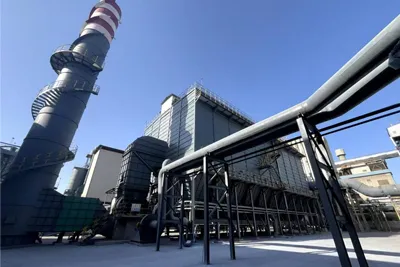
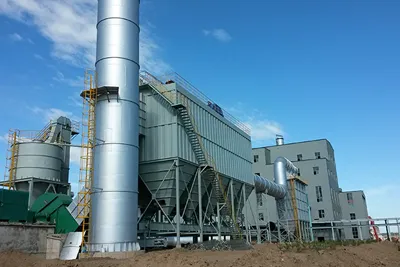
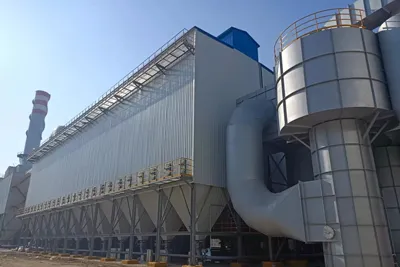
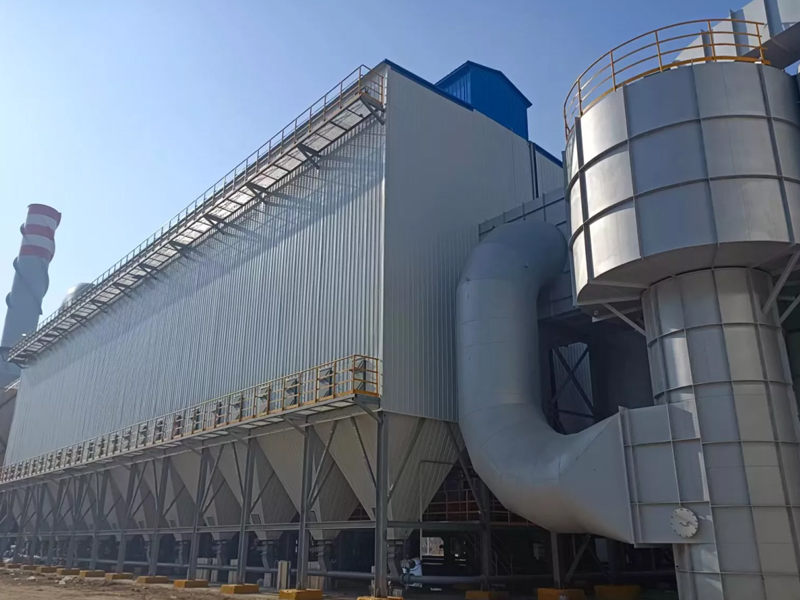
EnvirontechTS applies dry sodium-based desulfurization with bag filtration in suitable low-sulfur industrial furnace applications. In this arrangement, the reaction products are captured as dry solids rather than removed through a wet gypsum dewatering system.
The selection between wet, semi-dry and dry flue gas desulfurization equipment should therefore consider both SO₂ removal requirements and the plant’s ability to manage water and by-products.
What Should Be Confirmed Before Final Equipment Selection?
Before procurement, the project team should confirm:
Flue gas flow, temperature and SO₂ loading
Fuel and reagent variability
Required purge flow and maximum chloride level
Wastewater discharge, reuse or ZLD target
Gypsum or residue quality requirements
Treatment-sludge quantities and disposal route
Materials of construction
Redundancy for critical pumps, dewatering units and chemical systems
Sampling, monitoring and automation requirements
Space for future treatment upgrades
Regulatory requirements must be checked for the project location. In the United States, steam-electric wastewater requirements under 40 CFR Part 423 were amended in 2024, although EPA announced in March 2025 that it would reconsider parts of those standards. The applicable permit and current regulatory status should therefore be confirmed during design.
Conclusion
Reliable FGD waste management begins with an integrated water-and-solids mass balance. Purge flow, chloride control, wastewater treatment, gypsum dewatering and off-spec material handling should be engineered as connected parts of the system.
Wet FGD projects must account for variable salinity, suspended solids and trace contaminants. Dry and semi-dry systems reduce liquid waste but require dependable handling of collected reaction products. The most suitable design is the one that achieves stable emission control while providing a practical, compliant route for every water and solid stream.
EnvirontechTS can develop a customized desulfurization configuration based on flue gas conditions, site water availability, discharge requirements and by-product management goals.
FAQ
What is the main source of FGD wastewater?
It is mainly the absorber purge used to control chloride and dissolved contaminant buildup.
Why is FGD wastewater difficult to treat?
It contains high dissolved salts, suspended gypsum and trace contaminants that vary with fuel and operation.
What is the main by-product of wet limestone FGD?
Fully oxidized wet limestone systems normally produce calcium sulfate dihydrate, commonly called gypsum.
Can all FGD gypsum be sold?
No. Marketability depends on moisture, purity, chloride content, contaminants and local buyer specifications.
 English