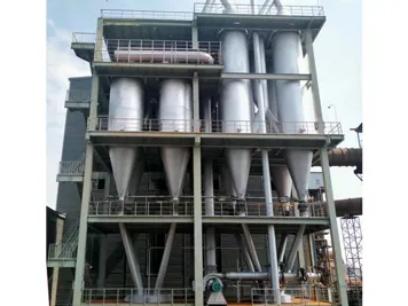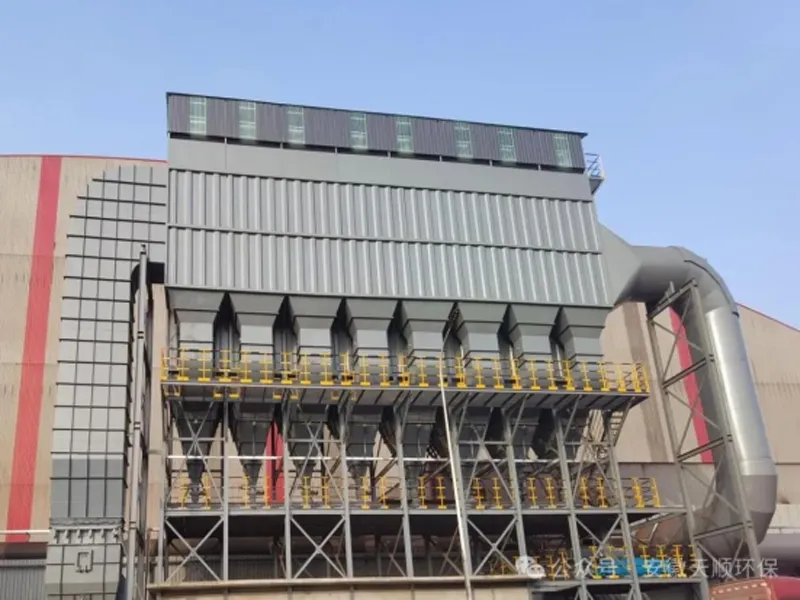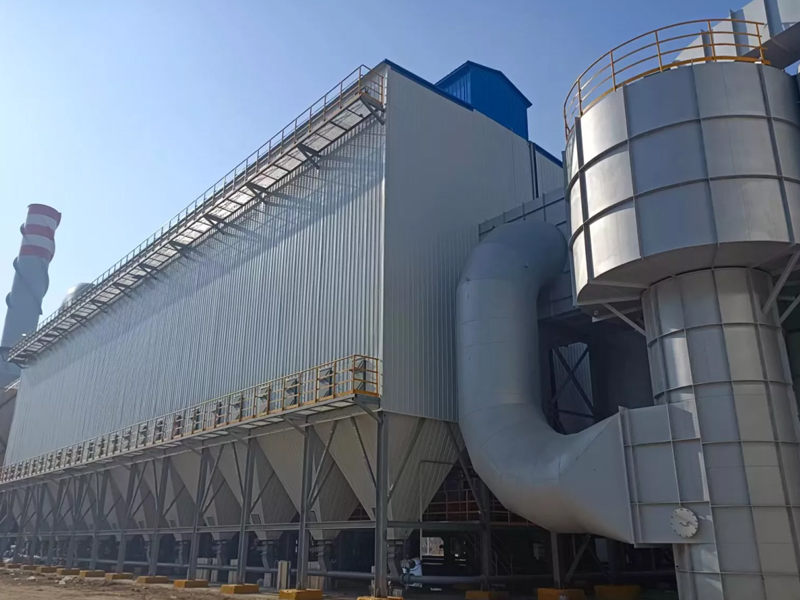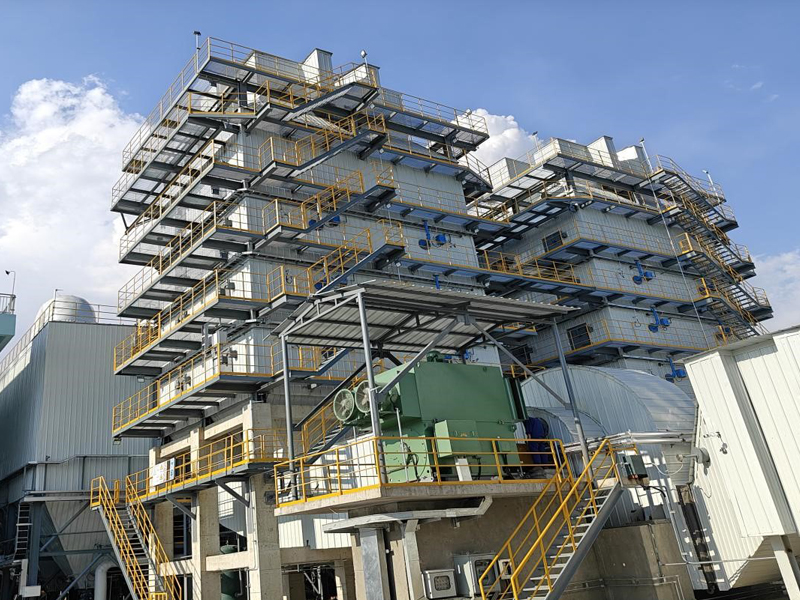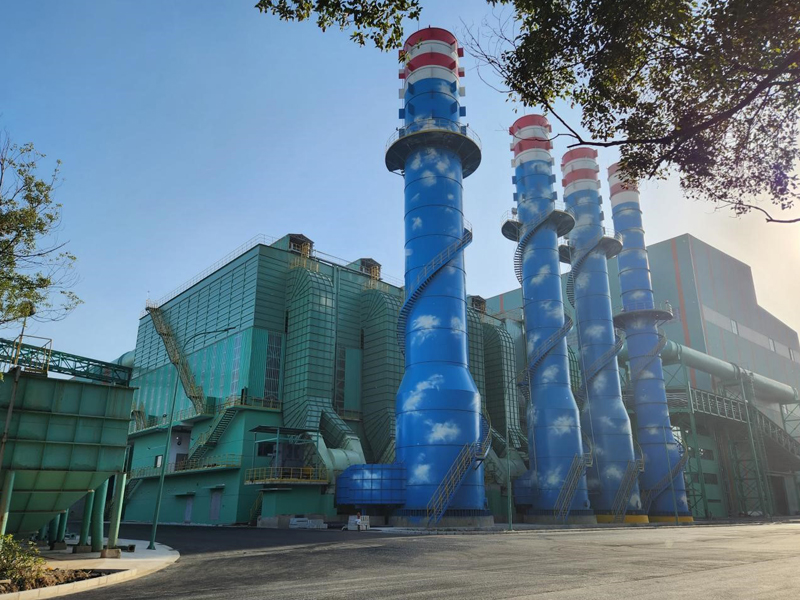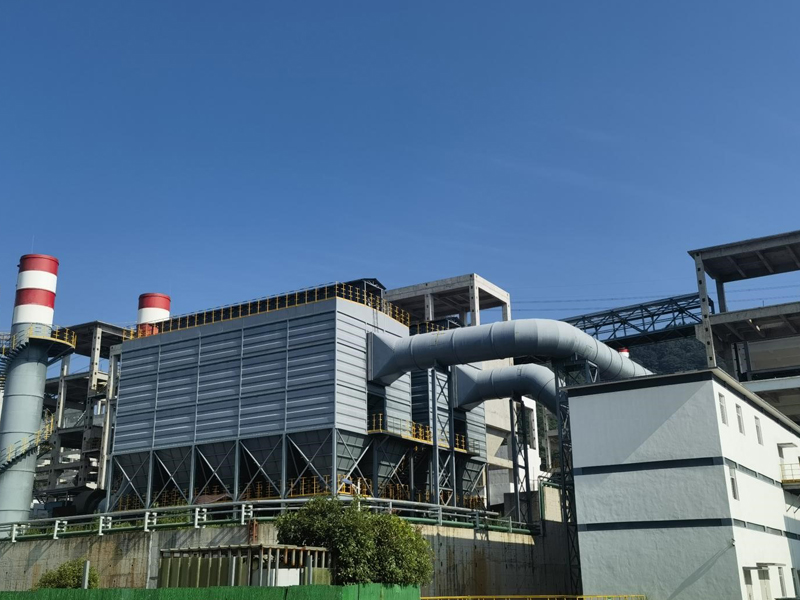
Activated carbon flue gas treatment is an effective polishing technology for controlling mercury, dioxins, furans, volatile organic compounds and other trace pollutants in industrial exhaust gas.
Rather than replacing dust removal, desulfurization or denitrification equipment, activated carbon is normally integrated into a complete flue gas treatment system. Its highly porous structure provides a large adsorption surface that captures pollutants which may remain after the main treatment stages.
Tianshun develops customized activated carbon treatment configurations according to flue gas temperature, pollutant composition, gas flow, required emission levels and existing plant equipment.
What Is Activated Carbon Flue Gas Treatment?
Activated carbon flue gas treatment uses powdered, granular or specially modified activated carbon to adsorb pollutants from an industrial gas stream.
Activated carbon contains a network of microscopic pores. When contaminated gas comes into contact with the carbon surface, pollutant molecules are retained through physical adsorption, chemical adsorption or a combination of both.
Depending on the activated carbon formulation and operating conditions, the process can help control:
Mercury and mercury compounds
Dioxins and furans
Volatile organic compounds
Certain heavy-metal vapors
Odorous organic substances
Residual trace contaminants
Activated carbon is commonly used as a supplementary flue gas purification stage. Dust, sulfur dioxide and nitrogen oxides are generally controlled by dedicated dust collectors, desulfurization systems and denitrification systems before or alongside activated carbon treatment.
Why Use Activated Carbon for Flue Gas Purification?
Some pollutants occur at relatively low concentrations but still require strict control. These trace contaminants may not be removed completely by conventional particulate filtration or acid-gas treatment alone.
The extensive pore structure of activated carbon allows it to capture small pollutant molecules from the gas phase. Different carbon formulations can also be selected or modified according to the target pollutant.
This makes activated carbon flue gas treatment particularly useful when an industrial plant needs:
Additional mercury control
Dioxin and furan reduction
Final polishing after primary gas treatment
Treatment of fluctuating trace pollutants
Retrofit installation within an existing plant
Flexible operation under changing production loads
The technology is especially relevant to flue gas treatment in waste to energy plants, where gas streams may contain dust, acidic gases, heavy metals and organic trace pollutants that require several coordinated treatment stages.
How Does the Activated Carbon Flue Gas Treatment Process Work?
The exact configuration varies between projects, but the general flue gas treatment process normally includes the following stages.
1. Flue Gas Pre-Treatment
Before activated carbon is introduced, the gas may need to be cooled and conditioned.
Temperature is an important design factor because excessively hot gas can reduce adsorption capacity or create operational risks. Dust and acid-gas concentrations should also be evaluated because these components can affect carbon consumption and pollutant capture.
Depending on the application, upstream equipment may include:
2. Activated Carbon Injection or Gas Contact
In a powdered activated carbon system, the sorbent is injected directly into the flue gas duct. The powder is distributed across the gas stream so that pollutant molecules can contact the carbon surface.
Injection location, carbon dosage, particle size, gas velocity and contact time all influence adsorption performance.
In a fixed-bed system, the flue gas passes through a layer of granular activated carbon. The longer contact time can provide deeper polishing, but the equipment normally requires more space and careful control of pressure drop and bed condition.
3. Pollutant Adsorption
As the flue gas contacts the activated carbon, mercury, organic compounds and other target pollutants are retained on or within the carbon pores.
The effectiveness of this stage depends on:
Type and surface properties of the activated carbon
Carbon injection rate or bed depth
Flue gas temperature
Pollutant concentration and chemical form
Moisture and sulfur content
Gas-carbon contact time
Distribution uniformity
Specially impregnated or modified activated carbon may be selected for pollutants that are difficult to capture with standard carbon.
4. Carbon and Dust Collection
Powdered activated carbon must be captured after injection. It is therefore commonly used together with dust removal equipment, particularly a bag filter.
The bag filter collects the carbon particles, adsorbed pollutants and remaining fly ash. The filter cake formed on the bag surface can provide additional contact between the gas and activated carbon.
Electrostatic precipitators may also be used in some configurations, although the collection method and available gas-carbon contact time should be considered during system design.
5. Residue Handling and Emission Monitoring
Spent activated carbon may contain mercury, heavy metals, dioxins or other hazardous contaminants. It should therefore be collected, stored and disposed of according to the pollutant composition and applicable local requirements.
Regeneration or reuse may be technically possible for certain fixed-bed applications, but it is not suitable for every activated carbon residue. The decision should be based on laboratory analysis, regeneration technology and waste-management requirements.
Continuous or periodic emission monitoring can be incorporated to evaluate system performance and adjust the activated carbon dosage when gas conditions change.
Powdered Activated Carbon Injection vs Fixed-Bed Adsorption
Two common configurations are powdered activated carbon injection and fixed-bed adsorption.
| Comparison | Powdered Activated Carbon Injection | Fixed-Bed Activated Carbon |
|---|
| Carbon form | Fine powdered carbon | Granular or shaped carbon |
| Installation | Injected into the gas duct | Gas passes through a carbon bed |
| Downstream equipment | Requires a bag filter or other collector | Usually uses a dedicated adsorption vessel |
| Contact time | Relatively short | Relatively long |
| Space requirement | Generally lower | Generally higher |
| Typical role | Flexible pollutant control and retrofit projects | Deep polishing and continuous adsorption |
| Carbon handling | Continuously or periodically injected | Carbon bed is replaced or regenerated |
| Suitable applications | Waste incineration, boilers and retrofit systems | Projects requiring longer contact time and stable gas conditions |
Neither configuration is universally better. Selection should be based on pollutant concentration, required removal level, available space, gas flow, operating schedule and existing flue gas cleaning equipment.
Key Advantages of Tianshun’s Activated Carbon Flue Gas Treatment
Multi-Pollutant Polishing
Activated carbon can capture several trace pollutants within one treatment stage, particularly mercury, dioxins, furans and certain organic compounds.
It can complement primary dust, sulfur and nitrogen oxide control technologies and improve the final outlet quality of the complete gas-treatment line.
Flexible System Integration
Powdered activated carbon injection can often be added to an existing duct and filtration system without reconstructing the entire production line.
Tianshun evaluates the current equipment layout, gas direction, available installation space and downstream collector before determining the injection point and equipment configuration.
Adjustable Carbon Consumption
Carbon consumption can be adjusted according to pollutant concentration, gas flow and operating load.
An automatic dosing system can connect carbon injection with process parameters or emission-monitoring data, helping prevent both insufficient dosing and unnecessary sorbent consumption.
Stable Industrial Operation
The system can be designed with carbon storage, conveying, dosing, injection and monitoring equipment suitable for continuous industrial operation.
Correct hopper design, dust control, conveying configuration and safety measures help improve operational stability and reduce manual handling.
Compatibility with Integrated Treatment Systems
Activated carbon flue gas treatment can be combined with cooling, desulfurization, denitrification and particulate filtration.
This coordinated approach allows each treatment stage to address the pollutants for which it is best suited instead of relying on activated carbon as the only purification technology.
Typical Industrial Applications
Waste Incineration and Waste-to-Energy Plants
Waste incineration gas may contain mercury, dioxins, acidic gases, dust and other trace contaminants.
Activated carbon injection is commonly installed before the final bag filter, while lime or another alkaline sorbent may be used for acid-gas control.
Tianshun can incorporate activated carbon treatment into a complete waste incineration solution according to the waste composition, furnace operation and required outlet limits.
Coal-Fired and Industrial Boilers
Coal and certain industrial fuels can release mercury and other trace pollutants during combustion.
Powdered activated carbon may be injected into the gas stream before a bag filter or electrostatic precipitator. Carbon formulation and dosage should be selected according to mercury speciation, sulfur content, gas temperature and existing air pollution control equipment.
Metallurgical and Smelting Processes
Some metallurgical processes generate gas containing dust, metal vapors and trace organic pollutants.
Activated carbon can be added as a polishing stage after gas cooling and primary particulate removal, provided that gas temperature and chemical composition are suitable for adsorption.
Chemical and Material Processing
Chemical production may generate low-concentration organic compounds or process-specific contaminants.
A customized gas purification system can use activated carbon to capture residual pollutants after upstream treatment, helping the plant achieve more stable final emissions.
Factors Affecting Activated Carbon Treatment Performance
The performance of an activated carbon system cannot be determined only by the amount of carbon used.
Activated Carbon Properties
Pore structure, surface area, particle size and chemical modification affect which pollutants the carbon can adsorb.
The selected carbon should match the target pollutant and flue gas composition.
Flue Gas Temperature
Temperature influences adsorption capacity and operational safety. The gas may require cooling before carbon injection or fixed-bed treatment.
Carbon Dosage
Insufficient dosage may result in incomplete pollutant capture, while excessive dosage increases operating cost and residue generation.
The injection system should provide accurate and stable feeding.
Contact Time and Mixing
Activated carbon must be distributed evenly across the gas stream. Poor mixing can create areas with insufficient carbon concentration and unstable removal performance.
Downstream Collection Efficiency
In an injection system, the adsorbent and captured pollutants must be collected effectively. Bag-filter design, filtration area, cleaning cycle and filter-cake condition can therefore influence the overall result.
Competing Gas Components
Moisture, sulfur compounds, fly ash and other gas constituents may compete for adsorption sites or affect carbon performance.
A complete gas analysis should be conducted before the final configuration is selected.
How to Select an Activated Carbon Flue Gas Treatment System
Before preparing a technical proposal, buyers should provide:
Flue gas flow rate
Normal and maximum gas temperature
Target pollutants and inlet concentrations
Required outlet emission levels
Dust concentration
Moisture and sulfur content
Existing dust-removal equipment
Available installation space
Daily and annual operating hours
Current treatment-process layout
Tianshun can then evaluate whether powdered carbon injection, fixed-bed adsorption or another treatment route is more appropriate.
A customized system may include:
Activated carbon storage silo
Feeding and metering device
Pneumatic conveying equipment
Injection lances
Adsorption reactor
Bag filter or other collection equipment
Automatic monitoring and control system
Residue storage and discharge equipment
Conclusion
Activated carbon flue gas treatment is an effective supplementary technology for removing mercury, dioxins, furans, organic compounds and other trace pollutants from industrial exhaust gas.
Its performance depends on activated carbon properties, gas temperature, pollutant composition, dosage, contact time and downstream collection efficiency. For this reason, activated carbon should be designed as part of an integrated flue gas purification system rather than treated as a standalone solution for every pollutant.
Tianshun provides customized activated carbon injection and adsorption configurations for waste incineration, boilers, metallurgy and other industrial applications. Contact us with your flue gas parameters and target emission limits to receive a project-specific treatment proposal.
Frequently Asked Questions
What pollutants can activated carbon remove from flue gas?
Activated carbon is commonly used to adsorb mercury, dioxins, furans, volatile organic compounds, certain heavy-metal vapors and other trace contaminants.
Can activated carbon remove SO₂ and NOx?
Activated carbon is generally used as a polishing or trace-pollutant treatment stage. Dedicated desulfurization and denitrification equipment is normally more appropriate for the primary removal of SO₂ and NOx.
Where is powdered activated carbon injected?
It is usually injected into the flue gas duct before a bag filter or another particulate collection device. The exact injection location depends on temperature, contact time and existing equipment layout.
Can spent activated carbon be regenerated?
Some granular activated carbon can be regenerated under suitable conditions. However, powdered carbon containing mercury, dioxins or hazardous residues may require controlled disposal rather than reuse.
How is activated carbon used in flue gas treatment in waste-to-energy plants?
Activated carbon is commonly injected before the final particulate collector to capture mercury, dioxins and other trace pollutants. It is usually combined with acid-gas treatment and high-efficiency dust filtration.
 English