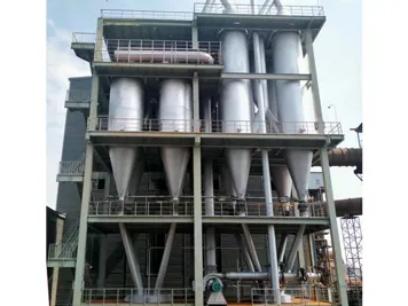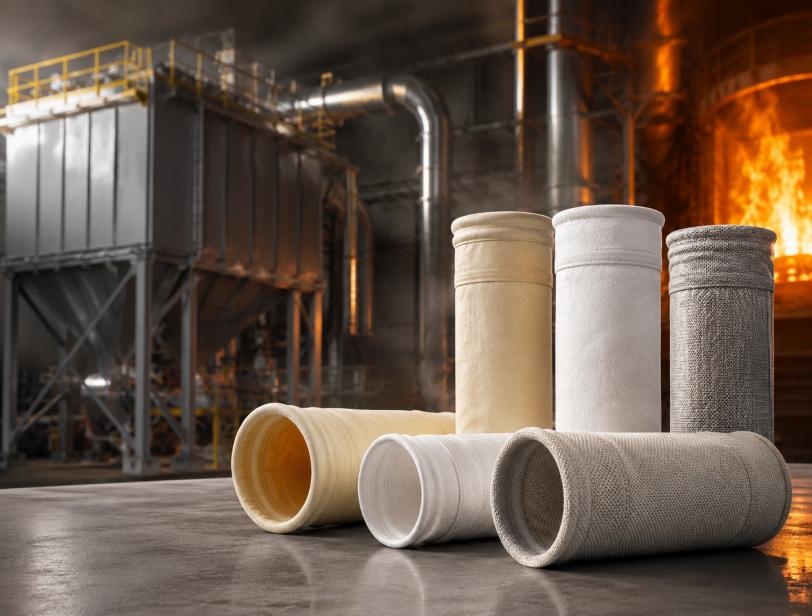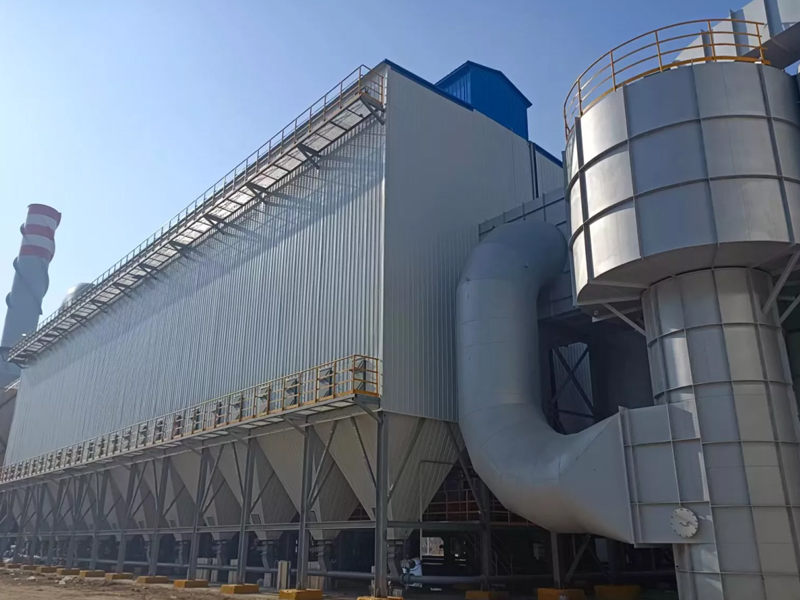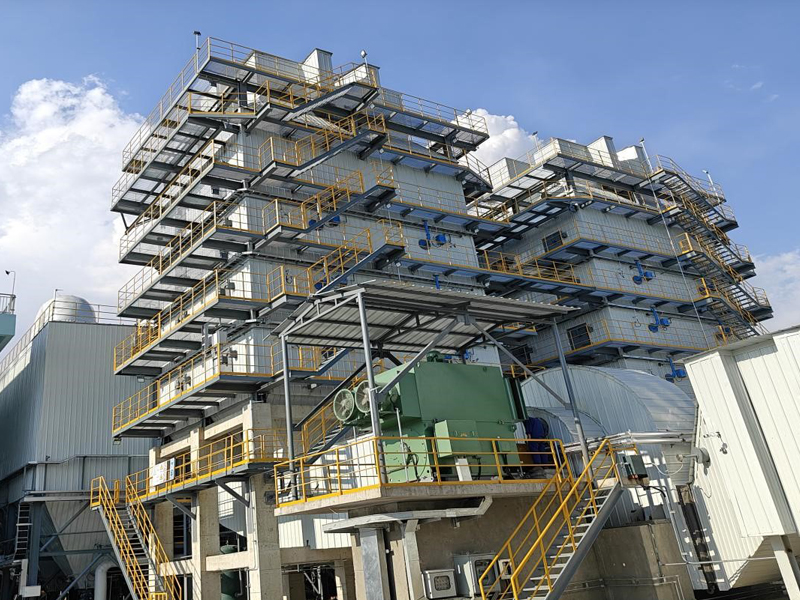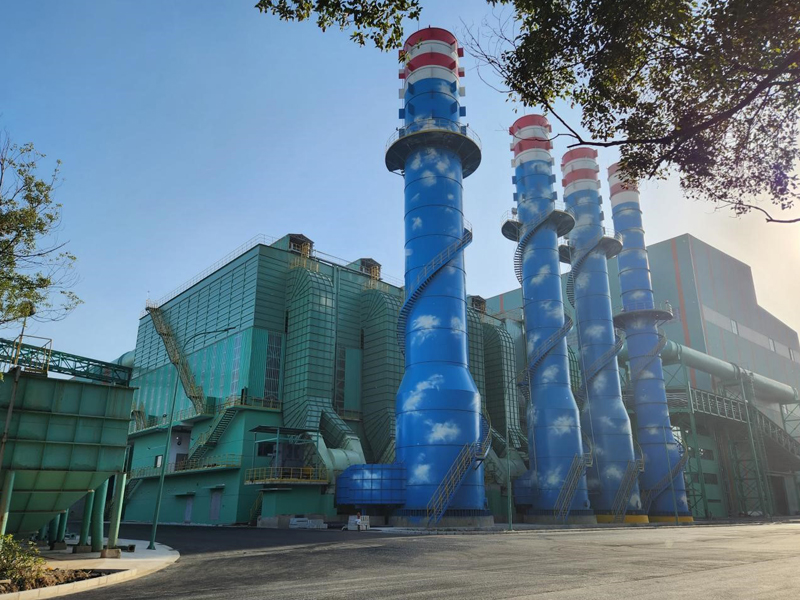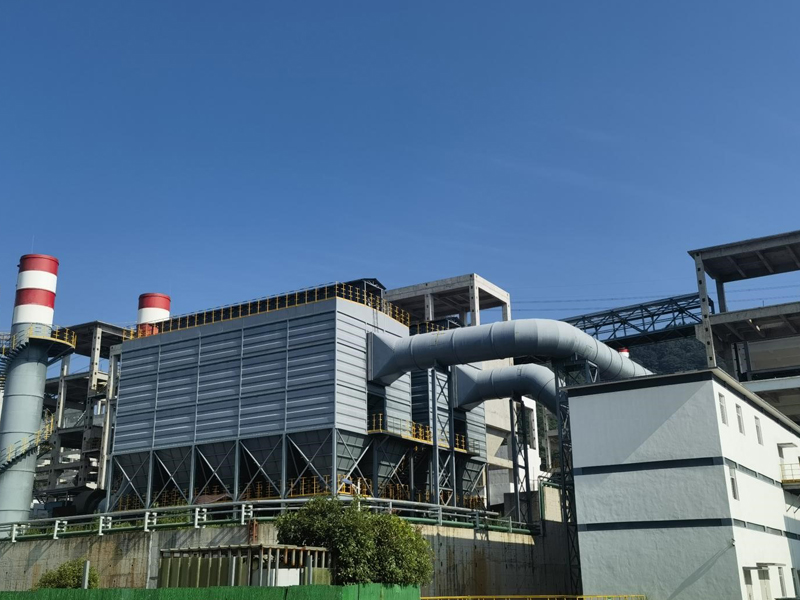
Industrial boilers, furnaces, kilns, power plants and metallurgical production lines can generate flue gas containing sulfur dioxide. Without appropriate treatment, these emissions may affect air quality, corrode downstream equipment and make it more difficult for industrial plants to meet environmental requirements.
Flue gas desulfurization, commonly abbreviated as FGD, is used to remove sulfur dioxide from industrial exhaust gas before stack discharge. Depending on the gas conditions and project requirements, plants may use wet, dry, semi-dry or other specialized desulfurization processes.
For facilities preparing a new emission-control project, Tianshun provides customized flue gas desulfurization systems based on gas flow, inlet SO₂ concentration, operating temperature, dust loading, available utilities and required outlet emissions.
This guide focuses on how the flue gas desulfurization process works, how the main FGD technologies differ and which factors should be considered before selecting an industrial system.
What Is the Flue Gas Desulfurization Process?
The flue gas desulfurization process removes sulfur dioxide by bringing contaminated gas into contact with an alkaline absorbent or sorbent.
Limestone, lime, hydrated lime, sodium bicarbonate and other alkaline materials may be used depending on the selected process. The sulfur dioxide reacts with the absorbent and is converted into more stable liquid or solid compounds that can be separated from the treated gas.
A typical FGD process contains the following stages:
Flue gas collection and conditioning
Absorbent preparation and delivery
Contact between the gas and absorbent
Chemical reaction and SO₂ conversion
Separation of droplets or solid reaction products
Residue or by-product handling
Monitoring and clean-gas discharge
The exact configuration depends on whether the plant uses wet, dry or semi-dry technology.
When dust, SO₂ and NOx must be treated together, the FGD unit may also form part of an integrated flue gas treatment system.
Wet, Dry and Semi-Dry FGD Systems
The main industrial FGD methods differ in absorbent form, water consumption, residue condition, equipment layout and suitable application scenarios.
Wet Flue Gas Desulfurization
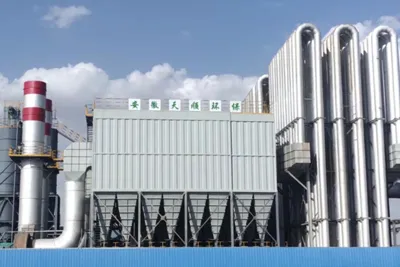
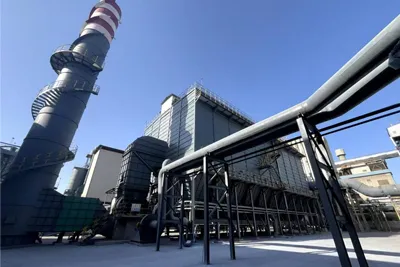
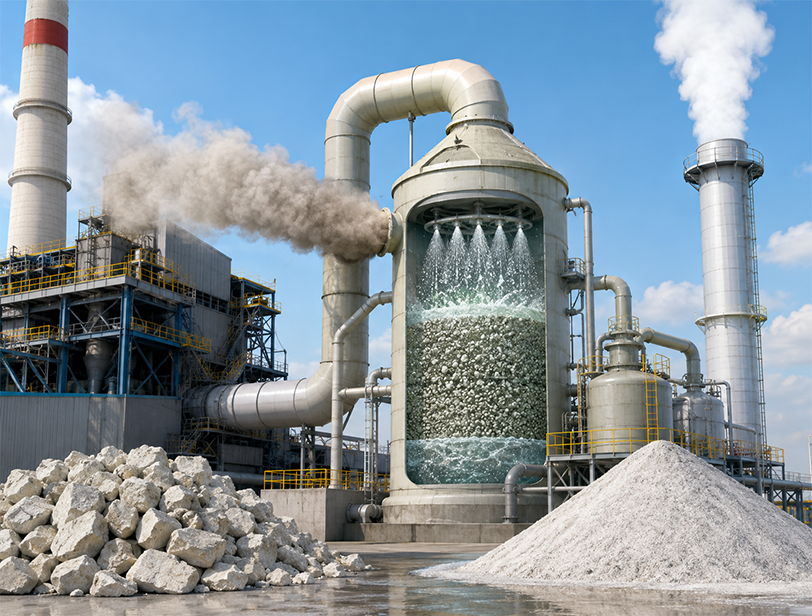
A wet flue gas desulfurization system brings the gas into direct contact with a liquid absorbent, usually limestone or lime slurry, inside an absorber tower.
SO₂ is absorbed into the liquid and reacts with alkaline compounds. Depending on the process and oxidation conditions, the resulting by-product may include calcium sulfite or gypsum.
Wet FGD is commonly considered for:
Large and continuous gas volumes
Relatively high inlet SO₂ concentrations
Projects requiring deep sulfur removal
Plants with sufficient water supply
Facilities capable of handling slurry and wastewater
Applications where gypsum recovery may be practical
The main equipment may include an absorber tower, slurry tanks, circulation pumps, spray systems, oxidation equipment, demisters and residue-dewatering equipment.
Wet systems can provide strong gas-liquid contact, but buyers should also evaluate corrosion protection, scaling control, water consumption, wastewater handling and auxiliary power demand.
Dry Flue Gas Desulfurization
Dry flue gas desulfurization introduces a dry alkaline sorbent directly into the gas stream.
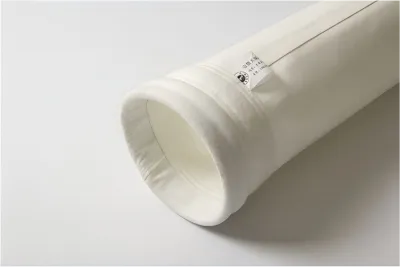
Hydrated lime, sodium bicarbonate or another suitable reagent reacts with SO₂ and forms dry solid compounds. These reaction products are normally captured by a downstream bag filter or another particulate-control device.
Dry FGD may be suitable when:
Water availability is limited
Wastewater generation should be minimized
The plant needs a relatively compact retrofit
Dry residue is easier to store and transport
The inlet sulfur load is moderate
Existing dust-collection equipment can support the process
Performance depends on sorbent properties, particle size, injection accuracy, gas temperature, residence time and gas-sorbent mixing.
Dry systems usually have simpler water-management requirements, but reagent consumption and downstream dust collection must be evaluated carefully.
Semi-Dry Flue Gas Desulfurization
A semi-dry FGD process sprays atomized lime slurry or another liquid absorbent into the hot gas.
As the droplets react with SO₂, the heat in the flue gas evaporates most of the water. The process produces dry or low-moisture reaction products, which are collected by a baghouse or electrostatic precipitator.
Semi-dry FGD can provide a balance between wet and dry processes. It may be considered for:
Industrial boilers
Waste-incineration facilities
Retrofit projects with limited wastewater capacity
Plants requiring better gas-sorbent contact than simple dry injection
Facilities that prefer dry residue handling
The system must maintain an appropriate approach-to-saturation temperature. If the gas is too hot, reaction efficiency may decline; if it becomes too cool, condensation and material buildup may occur.
FGD Process Comparison
| Selection factor | Wet FGD | Dry FGD | Semi-Dry FGD |
|---|
| Absorbent form | Liquid slurry or solution | Dry powdered sorbent | Atomized slurry |
| Water demand | Relatively high | Low | Moderate to low |
| Final residue | Slurry, sludge or gypsum | Dry solid | Dry or low-moisture solid |
| Typical footprint | Usually larger | Usually compact | Moderate |
| Wastewater requirements | May be required | Usually limited | Usually limited |
| Suitable sulfur load | Moderate to high | Low to moderate | Moderate |
| Downstream collector | Demister and process-specific equipment | Baghouse or ESP | Baghouse or ESP |
| Common advantage | Deep sulfur removal | Low water use and easier retrofit | Balance of reaction and residue handling |
The table provides a general comparison only. The final FGD system should be selected according to actual flue gas data and project conditions.
How to Select the Right FGD System
There is no single gas desulfurization process suitable for every industrial plant. Selection should begin with a detailed review of the production process and untreated flue gas.
Flue Gas Flow Rate
Gas flow determines absorber size, duct dimensions, fan capacity, filtration area and reagent-delivery requirements.
The system should be designed for normal load as well as maximum operating conditions. If the gas volume is underestimated, the FGD unit may experience insufficient contact time, excessive gas velocity or unstable pressure.
Inlet SO₂ Concentration
Inlet concentration determines the sulfur load that must be removed per hour.
Higher SO₂ loads generally require greater reaction capacity, higher absorbent consumption and stronger residue-handling capability. Fuel or raw-material fluctuations should also be considered rather than relying only on average concentration.
Required Outlet Emission Level
The target outlet concentration affects process selection and equipment configuration.
A plant requiring deeper removal may need improved gas distribution, more precise reagent control, greater reaction capacity or additional polishing stages.
Removal efficiency should be evaluated under clearly defined operating conditions instead of using a single theoretical percentage.
Water and Wastewater Availability
Wet FGD requires process water and may generate a liquid purge stream that needs treatment.
Plants with limited water resources or insufficient wastewater capacity may prefer dry or semi-dry processes. However, the alternative system must still be checked for sorbent consumption and residue-disposal requirements.
Available Installation Space
New-build facilities generally have more flexibility in equipment layout, while retrofit projects must work around existing ducts, buildings and production equipment.
Dry injection may require less space, whereas wet systems normally need room for absorber towers, tanks, pumps and dewatering equipment.
Dust and Gas Characteristics
Dust concentration, particle properties, gas temperature, moisture, chlorine, sulfur trioxide and other gas components can influence corrosion, scaling, filter operation and absorbent performance.
If the gas contains high dust or multiple pollutants, desulfurization should be coordinated with upstream dust removal and downstream denitrification.
Tianshun’s desulfurization and denitrification technical solution can integrate SO₂, NOx and particulate-control stages according to the complete pollutant profile.
Residue and By-Product Management
Wet limestone FGD may produce gypsum when oxidation and by-product quality are properly controlled. However, whether gypsum can be reused depends on purity, moisture, local demand and applicable requirements.
Dry and semi-dry systems generate solid mixtures containing fly ash, reaction products and unreacted sorbent. Their storage, transport and disposal should be considered during process selection.
When Is Fixed-Bed Desulfurization Appropriate?
Not every industrial application requires a conventional wet absorber or sorbent-injection process.
A fixed-bed desulfurization system passes contaminated gas through a bed containing a suitable desulfurizing material. It may be considered for specific gas compositions, smaller gas volumes or applications requiring a compact treatment stage.
Its suitability depends on:
Fixed-bed technology should therefore be evaluated as a process-specific option rather than a universal replacement for wet or dry FGD.
Operational and Lifecycle Cost Considerations
The purchase price of flue gas desulfurization equipment is only one part of the total project cost.
Buyers should also evaluate:
Absorbent consumption
Electricity used by fans and pumps
Process-water demand
Wastewater treatment
Filter or demister maintenance
Corrosion-resistant materials
Scaling and blockage risk
Residue transportation and disposal
Spare parts and maintenance labor
Production downtime
Equipment service life
A lower-priced system may result in higher lifecycle costs if it consumes excessive reagent, causes frequent shutdowns or cannot adapt to changes in plant load.
Typical Industrial Applications of FGD
FGD technology can be adapted to industries that burn sulfur-containing fuels or process sulfur-containing materials.
Typical applications include:
Power Plants and Industrial Boilers
Coal-fired, biomass and process boilers may require SO₂ control together with particulate filtration and NOx reduction.
Metallurgical and Smelting Plants
Steel, ferroalloy, non-ferrous metal and silicon-material production may generate dust-intensive gas streams with fluctuating sulfur concentrations.
Chemical Manufacturing
Chemical processes may release sulfur dioxide or other acidic gases requiring process-specific absorbents and corrosion-resistant materials.
Waste Incineration
Waste-incineration gas may contain SO₂, hydrogen chloride, dust, heavy metals and organic trace pollutants. Desulfurization is therefore normally one stage in a multi-pollutant treatment system.
Cement, Lime and Industrial Kilns
Fuel composition and raw materials can introduce sulfur into kiln exhaust. FGD selection should consider temperature, dust loading and continuous operating requirements.
What Information Should Buyers Provide?
Before an FGD proposal can be prepared, buyers should provide as much of the following information as possible:
Normal and maximum flue gas flow
Inlet gas temperature
Inlet SO₂ concentration
Required outlet SO₂ concentration
Dust concentration
Moisture and oxygen content
Other acidic gas components
Daily and annual operating hours
Fuel or raw-material type
Available water and wastewater capacity
Available installation space
Existing upstream and downstream equipment
These data allow the supplier to determine the appropriate process, absorber or reactor capacity, absorbent system, material configuration and auxiliary equipment.
Why Work with Tianshun?
Tianshun develops customized industrial emission-control systems rather than applying one standard FGD configuration to every project.
Our project capabilities cover:
Flue gas data analysis
Wet, dry, semi-dry and fixed-bed process evaluation
Equipment and system design
Absorbent preparation and dosing
Dust-removal integration
Desulfurization and denitrification coordination
Equipment manufacturing
Installation and commissioning support
Automation and monitoring
Maintenance planning
By considering treatment performance, energy consumption, reagent use, corrosion protection and maintenance together, Tianshun helps industrial plants select a practical flue gas desulfurization system for long-term operation.
Conclusion
Flue gas desulfurization is not a single standardized piece of equipment. It is an engineered treatment process that must match the gas volume, SO₂ load, temperature, emission target, available utilities and site conditions of each industrial plant.
Wet FGD is commonly used for large gas volumes and deep sulfur removal. Dry FGD reduces water use and can be suitable for compact retrofits, while semi-dry FGD offers a balance between gas-sorbent contact and dry residue handling.
The best system is the one that achieves the required emission level while maintaining stable operation and manageable lifecycle costs.
Contact Tianshun with your flue gas parameters, site conditions and target emissions to receive a customized FGD process recommendation.
Frequently Asked Questions
What does FGD stand for?
FGD stands for flue gas desulfurization, also spelled flue gas desulphurization in British English. It refers to processes used to remove sulfur dioxide from industrial flue gas.
What is the difference between wet and dry flue gas desulfurization?
Wet FGD uses a liquid alkaline solution or slurry, while dry FGD introduces powdered sorbent into the gas stream. Wet systems usually require more water, whereas dry systems generate solid reaction products collected by downstream filtration equipment.
Is semi-dry FGD the same as dry FGD?
Semi-dry FGD is often grouped within the broader dry FGD category because its final reaction product is collected as a dry or low-moisture solid. However, semi-dry systems inject an atomized slurry rather than only dry powder.
Which FGD system is best for high SO₂ concentrations?
Wet FGD is frequently considered for high gas volumes or sulfur loads, but the final selection must also consider water availability, wastewater treatment, required outlet emissions, space and lifecycle cost.
What should buyers check when evaluating semi-dry FGD equipment suppliers?
Buyers should review process experience, atomizer or nozzle configuration, temperature control, absorbent dosing accuracy, downstream dust collection, residue handling, automation and project references under similar gas conditions.
 English